
Why Meditation?
Meditation is more than a technique for feeling better, it’s a way of approaching our whole life. Mindfulness meditation focuses on the cultivation of presence and awareness. This leads to the integration of mind, body and environment, which alleviates unsatisfactoriness, dis-ease and suffering (suffering means any undesired feeling). In the place of that suffering, we get peace, joy, contentment and the aspiration to relieve suffering in others and the world around us.
For many people, the entry point to learning meditation is to relieve our own pain. This might be stress, anxiety, depression, chronic physical pain, poor sleep, over-thinking, addiction, the emotional roller coaster of life, or any of the long list of mental, emotional and physical health challenges that arise in the mind. If this is you, excellent, you’re in the right place.
With respect to these outcomes, we can see meditation as the gym for the mind. We all know the benefits of physical exercise for the body, but we often don’t appreciate that the mind can be strengthened and conditioned as well. By practicing specific techniques, we train what are known as skilful mental states. These states are things like concentration, presence, kindness, dis-attachment and forgiveness. These states of mind we can actively grow. When this happens, beneficial outcomes permeate our lives.
For many people, this strengthening of the mind is enough to lead a full and happy life. But the use of meditation as a tool to generate specific outcomes is really just the tip of the iceberg. When we cultivate deeper awareness, we see all the parts of ourselves with more clarity. Patterns, beliefs and behaviours that were subconscious become conscious, and this knowledge of self is the key to lasting change.
Meditation is a non-religious practice. There are no beliefs that you must hold, dogma to subscribe to, or rules you must adhere to in order to practice meditation. This practice only promises to give you a clearer picture of yourself and your surroundings. Indeed, if you are religious or spiritual, it is almost inevitable that your spirituality will be strengthened when meditation is practiced.

Why Mindfulness?
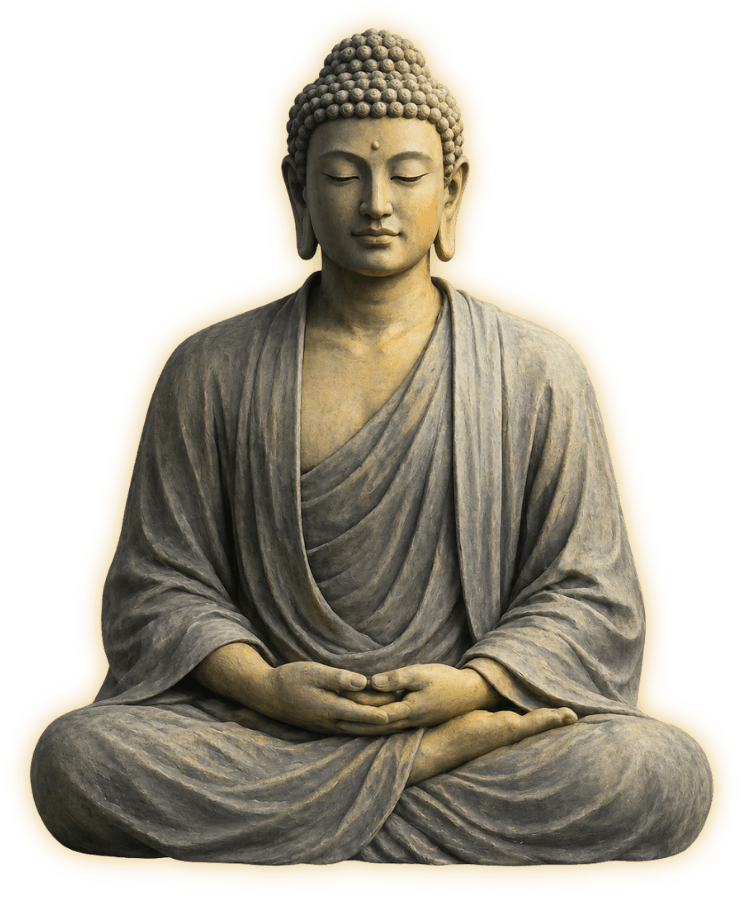
There are hundreds of different types of meditation out there. You may have heard of some of the most common, which include mindfulness meditation (including Vipassana), transcendental and mantra meditation, guided meditations like yoga nidra, visualisations, body-based practices like tai chi, qigong and yoga, and many contemplative practices, like those seen in Christian and Islamic traditions. While there are many similarities between these methods, and while they mostly branch from the same evolutionary tree of meditation as a whole, different techniques will have different impacts on our mental, emotional and physical health. Think of how different gym exercises produce different results in the body.
Mindfulness has its roots in Buddhism, and its goal is to focus our attention on aspects of reality that are based in the present moment. These include our breath, bodily sensations, feelings, and the mind itself.
Practicing mindfulness makes us more aware–more present in the here-and-now. Consider for a moment your mind racing around thinking about this and that. This is what has been called the ‘monkey mind’. If you pay attention, you will notice that all of your thoughts are about things in the past or the future. Everything is about how things could, should or would have been. This is non-presence, you’re not in the here-and-now, you’re thinking about past or future.
In these types of thoughts there is also always some level of judgement. It may be very subtle–often completely subconscious–but this 'could, should or would' carries the implicit admission that you are not happy with how things are. If you were, why would you be thinking about changing them? You observe your life as it is and you determine you could do better. Then you go over it again and again and again, always stuck in a thought and absent from the real world in front of you. This sort of rumination that doesn’t feel nice. This is suffering.
The practice of mindfulness trains us out of that mode of thinking, it brings us to the present moment. When you enter the present moment, all of that judgement simply vanishes into thin air. It’s gone. No judgement, no ‘could be better’. Everything just is, and that is good. This is the release of suffering. We all know this feeling of 'just being' already. It is there in those moments of peace when you watch a pleasant sunset, or listen to a piece of beautiful music, or sit and be happy with friends. The practice of mindfulness is about embodying those moments more often and more fully, and getting there is fully within your control.
Life happens in the present moment. We want to live our lives knowing that we were there and present for all the small moments, because it’s those small moments that make up a full and happy life. Wouldn’t it be a shame if you lay on your death bed and thought, "Gee, I wish I was more present for my kids, my partner, myself, my community. I was always off thinking about work and money and my image and all those things that really didn’t matter. Now it’s too late." It’s never too late to take up this practice, and it’s never too late to be a bit more present.
The Science of Mindfulness Meditation
Meditation is no longer considered a 'hocus pocus' alternative practice. Since the 1970's, scientists have been studying the effects of meditation on our physiology, psychology, physical health, emotional states and ability of introspection. Mindfulness meditation is now one of the most extensively researched contemplative practices in modern psychology and medicine, and there are literally thousands of peer reviewed scientific studies, including hundreds of randomised controlled trials and systematic reviews, supporting the benefits that have been extolled by monks on hills for the last few thousand years.
Overall, this research shows that regular mindfulness practice can produce meaningful improvements in psychological wellbeing, reducing stress, anxiety, depression, emotional reactivity, and rumination, while improving attention, emotional regulation, resilience, and overall quality of life.
The research clearly shows that meditation strengthens our ability to be aware of our own thoughts, emotions and sensations without becoming overwhelmed by them. This sort of stepped back awareness is associated with healthier emotional regulation, improved decision-making, greater self-compassion, and a reduced tendency to react automatically to life's challenges. Brain imaging studies have also documented measurable changes in networks involved in attention, self-awareness, and emotional processing, as well as actual physical changes in brain architecture, following regular meditation practice. The evidence around this practice is so clear that universities such as Oxford, Brown and UCLA all have mindfulness research centres and programmes.
The overall conclusion from the scientific literature is that mindfulness meditation is a safe, evidence-based practice that can make a meaningful contribution to mental health and wellbeing when practised consistently.
Going Deeper
It is only during moments of mindful awareness that we are able to see the true nature of ourselves. If we are busy judging reality, we cannot see life for what it is. A busy mind is occupied, and an occupied mind has no room for learning. This is why when we meditate on aspects of the present moment–bringing ourselves away from the busy monkey mind and creating space within our experience–we see more deeply into the way we are. It is in the space we create that insights arise. We see why we have been behaving and thinking in certain ways, why we continue to hold onto things that no longer serve us, why we feel the way we do. Of course, we cannot undo a self-defeating thought, belief or behaviour without identifying it first. This is the journey of self-development that meditation promises.
As we go further down the path of meditation we may decide we want to know more about why it works, and the true nature of our mind. This is where the Buddhist tradition shines. Where mindfulness meditation is the ‘how’, Buddhism is the ‘why’. The Buddhist path provides a detailed map of the subtleties of the mind and shows us which threads to pull, and when. Eventually, pulling these threads and practicing ardently can lead to the cessation of all suffering. This is the process of ‘enlightenment’ that you may have heard of the Buddha achieving in ancient India over 2,500 years ago.
Mindfulness also leads to more vitality. Have you ever met a sad monk? I haven’t. Monks are almost always vibrant and full of life. Long-term meditators are deeply attuned to the supreme spaciousness and bliss that is inherent within the universe in every moment–they are more in touch with what we might call God, Source, the Collective Consciousness or whatever other superlative you use to describe that deeper life force. Most of us live our lives on the surface, on the pinnacle of the iceberg that pokes out above the waves. But there is so much more to every moment than what the ordinary mind connects with. True serenity is always there, true peace is always there, the awe of our fragile and precious place in the universe is always there. Seeing and embodying this this is the promise of mindfulness if you stick with it.
I'm not saying we should all be monks or strive for enlightenment. Meditating in a cave in the Himalayas for years isn't for everyone! But this is to say that our ability to release ourselves from suffering and dissatisfaction is in direct relationship to our ability to be present. It is really that simple, and if we choose, Buddhahood is within our reach. We exist on a continuum with suffering on one side and enlightenment on the other. Where we want to live our lives on that continuum is up to us.
Start today, the depth of life awaits.